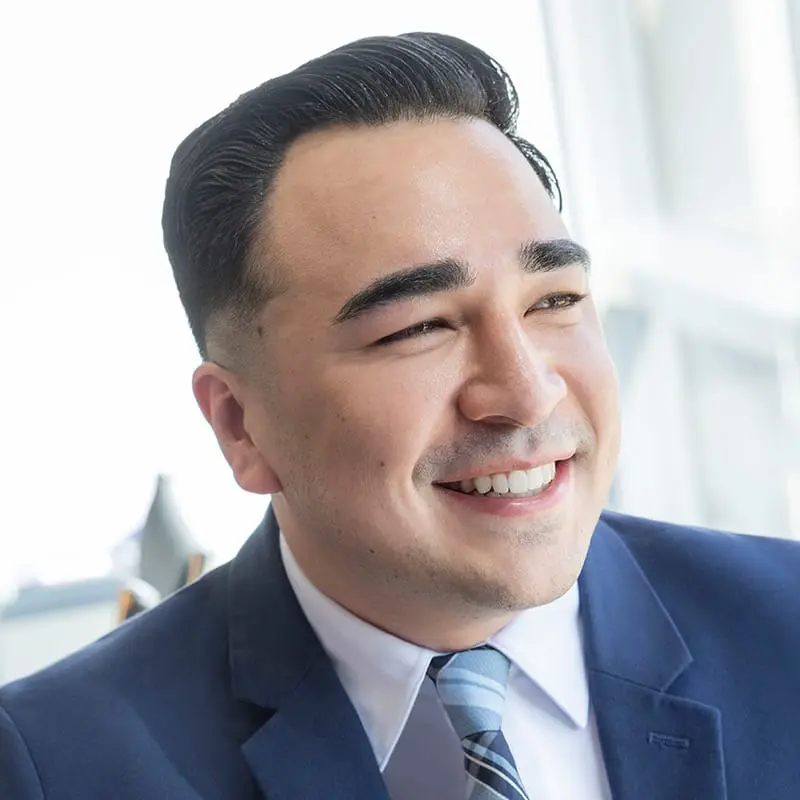



Justin Wilson
Senior Attorney
A parole hearing can be a life-altering event. With the Texas Board of Pardons and Paroles reviewing tens of thousands of cases annually, the outcome often hinges on the quality of your presentation. Parole is the discretionary and conditional release of an eligible prisoner to serve the remainder of their sentence under supervision in the community.
In Texas, parole is a privilege, not a right, and the Board of Pardons and Paroles is not required to release anyone on parole.
A Frisco parole lawyer can help you through this high-stakes process. [firm-name] understands many of the specific factors parole boards prioritize and works to build a compelling case to advocate for your release in Frisco and throughout North Texas. My Dallas Criminal Lawyer offers statewide representation and draws on criminal defense experience to advocate for clients’ interests throughout the parole process.
When facing the Texas parole system, experience is important. My Dallas Criminal Lawyer brings years of experience representing clients before the Texas Board of Pardons and Paroles. We advocate on behalf of our clients during parole hearings and related proceedings, handling filings, communications, and speaking for you to support clear and effective advocacy. We understand the board’s expectations, aspects of their decision-making process, and strategies that may help support a positive outcome. Our understanding of the Texas criminal justice system allows us to handle legal and administrative procedures on your behalf.
Our approach is built on:
Thorough Case Preparation: We identify the strongest arguments by reviewing your entire file.
Strategic Presentation: We tailor a hearing strategy specific to your circumstances, considering your unique background and rehabilitation progress.
Testimony Coaching: We help you prepare your statements so you can present yourself effectively.
Choosing an experienced parole lawyer in Texas is advisable, as such lawyers understand many of the policies and unwritten expectations that can influence parole board decisions. Our results and client testimonials show how we have advocated for clients in serious criminal and parole matters.
Ready to discuss your case? Call 214-949-4117 for a free consultation.
The Texas Board of Pardons and Paroles does not function like a standard criminal court; there are no trials or traditional courtroom hearings. Instead, the Board primarily conducts a file review to evaluate your background and perceived public safety risk. Eligibility for parole depends on several factors, including the nature and severity of the offense, the prisoner’s criminal history, and their institutional adjustment and disciplinary record.
Eligibility: Many inmates in Texas become eligible after serving a specific portion of their sentence, depending on the offense type and how Texas parole law applies to their case. In some cases, individuals must serve a larger percentage of their sentence before becoming eligible, and not all inmates qualify for mandatory supervision. The Texas Board of Pardons and Paroles reviews thousands of cases each year, making it important to have knowledgeable representation. Understanding your parole eligibility timeline is important for planning your case strategy.
File Review vs. In-Person Hearing: The process is primarily a file review. While an Institutional Parole Officer (IPO) interviews the inmate, the voting board members typically do not meet with the inmate directly. Parole lawyers in Texas can help clients understand how the file review process differs from any limited interactions with parole officials.
The Lead Voter: Because you often cannot appear in person, your written parole packet is critical. Attorneys may submit additional advocacy or attempt to communicate with decision-makers when appropriate, but there is no guaranteed opportunity to meet directly with the voting panel. The parole process typically begins several months before the initial review date and before subsequent reviews, and the specific date of review is important for planning and protecting your rights.
The Board considers a wide range of factors when making parole decisions, including participation in educational and vocational programs and the reentry plan. A disciplinary record can impact parole decisions, but it does not automatically disqualify a prisoner. The parole board generally requires a majority vote to grant parole, often with a panel consisting of one Board Member and two Parole Commissioners. If parole is denied, individuals typically have the opportunity to be reviewed again after a certain period, often one to two years, depending on their offense and the board’s rules. The Texas Board of Pardons and Paroles reviews cases for parole and mandatory supervision, but the processes and eligibility criteria differ.
It is important to understand the differences between parole, mandatory release, and discretionary mandatory supervision. Mandatory release (often referred to as mandatory supervision under current law) may occur by operation of law once certain conditions are met, typically based on time served and good behavior, but not all inmates are eligible. This is distinct from parole, which is a discretionary decision by the Board. Discretionary mandatory supervision allows the Board to deny release even when time calculations are met. Both parole and mandatory supervision require compliance with specific conditions, and violations can lead to re-incarceration. Time credits play a significant role in calculating eligibility and projected release dates for all these forms of release.
Preparation can be a major factor that influences whether parole is approved or denied. My Dallas Criminal Lawyer takes a comprehensive approach to readiness:
A parole attorney can help assemble and present written materials that demonstrate rehabilitation and address perceived risks to the parole board. Preparation with an attorney helps your written materials be thorough and submitted on time, which can support your efforts being fully considered. Additionally, a parole attorney can help contextualize your disciplinary record and highlight positive behavior to support your parole eligibility. Our Frisco office focuses on comprehensive parole hearing preparation.
Texas law sets specific eligibility requirements that vary by offense type:
The Board utilizes a parole guidelines score that weighs factors such as age, criminal history, and institutional conduct. Time credits, such as good conduct time, are an important factor in determining parole eligibility and projected release dates. Parole lawyers help clients understand how their institutional record and program completions can influence their Parole Guidelines Score. They also closely examine your parole plan—specifically where you will live in Frisco or surrounding areas and your employment prospects. Parole lawyers can offer end-to-end parole representation, including assistance with time credit issues and advocacy in support of earlier release where permitted by law.
Violating parole conditions can lead to revocation and a return to prison. Violations are often categorized as:
Parole lawyers can assist in challenging disciplinary findings that impact parole eligibility or result in a release vote being withdrawn, when appropriate. They also maintain contact with TDCJ and the Parole Board offices to stay current on cases and respond to developments. Additionally, a parole attorney can prepare family members to speak on behalf of the client at the hearing, helping their statements align with the overall strategy.
If the board alleges a violation, you have the right to a revocation hearing. My Dallas Criminal Lawyer can represent you at these hearings, challenge evidence when appropriate, and present mitigating factors in an effort to protect your freedom. In some instances, it may be possible to advocate for modified conditions rather than full revocation, depending on the facts of the case and board discretion. Learn more about probation revocations and Frisco probation revocation defense to understand your options.
Preparation can make the difference between approval and denial. My Dallas Criminal Lawyer takes a comprehensive approach to getting you ready for your hearing. Experienced parole lawyers rely on their knowledge and experience to develop personalized plans for each client, which can increase the chances of a successful parole outcome.
We start with a detailed case evaluation. We review your entire file, including your offense, sentence, institutional record, and any prior parole decisions. As part of our consulting process, a detailed interview and thorough analysis of the inmate’s background and institutional record are conducted to help ensure nothing is overlooked. This review helps us identify the strongest points in your favor and any challenges we need to address.
Next, we develop a hearing strategy. We determine which arguments may resonate with the board and how to present your case most effectively. Effective parole lawyers create tailored strategies that focus on the inmate’s unique circumstances. We also help you gather supporting documentation — letters from family, employers, or community members who can speak to your character and rehabilitation.
We prepare you for your interview with the Institutional Parole Officer (IPO). Since the IPO’s report heavily influences the Board, we work with you so you are ready to answer questions about your history, your rehabilitation, and your future plans effectively. We also help you articulate your remorse and growth, helping your file reflect the person you are today, not just your past mistakes. On hearing day, we represent you before the board, present your case, and advocate for your release.
Preparation plays a major role in the parole process, and strong advocacy can significantly affect how your history and rehabilitation are perceived by the board.
Not everyone in prison qualifies for parole. Texas law sets specific eligibility requirements based on your offense and sentence.
For most non-aggravated offenses, inmates become eligible for parole when their actual time served plus good conduct time equals one-fourth (1/4) of their sentence or 15 years, whichever is less. However, for “3g” aggravated offenses (such as aggravated assault or murder), inmates must serve half (1/2) of their sentence or 30 years calendar time — without good time credit — before becoming eligible. Certain violent crimes carry even longer requirements — capital murder requires 40 years minimum, and aggravated sexual assault with prior felonies requires 35 years minimum.
The Texas Board of Pardons and Paroles uses a parole guidelines score to evaluate cases. This score considers factors like your age, criminal history, institutional conduct, and the nature of your offense. The board also looks at your parole plan — where you will live, whether you have employment lined up, and what support system you have in place.
The board considers several factors when deciding whether to grant parole:
If you are released on parole, you must follow the conditions set by the board. Violating those conditions can result in parole revocation — sending you back to prison.
A parole violation can be technical or substantive. A technical violation means you broke a condition of parole, such as missing a check-in or failing a drug test. A substantive violation means you committed a new crime. Either type of violation can lead to revocation.
If the board believes you violated parole, you have the right to a revocation hearing. At this hearing, the state must prove the violation occurred. You have the right to present evidence and witnesses in your defense. My Dallas Criminal Lawyer represents clients at revocation hearings and fights to protect their freedom.
We examine the evidence against you and challenge violations that lack sufficient proof. We present mitigating factors that support keeping you on parole. In some cases, we negotiate with the board to modify your parole conditions instead of revoking parole entirely.
Supporting a loved one through the parole process in Texas can be both overwhelming and emotionally taxing. Understanding the steps involved and the role of a knowledgeable parole attorney can make a meaningful difference in your loved one’s efforts toward release and a law-abiding life.
The parole review process begins months before the scheduled review date, and it’s important to be proactive. An institutional parole officer will meet with your loved one to gather information and prepare a summary for the parole panel. During this time, having an experienced parole lawyer on your side helps support making sure your loved one’s parole packet is complete, accurate, and well organized. A well-prepared parole packet, which includes documentation of rehabilitation efforts, good behavior, and support from family and community, can strongly influence the parole board’s decision.
The Texas Board of Pardons and Paroles considers several factors during the parole review, including criminal history, disciplinary record, and participation in rehabilitation programs. A parole attorney can help present your loved one’s case in the best possible light, advocating for their release and addressing concerns the board may have. Strong advocacy and a solid understanding of Texas parole law are important to meeting the legal requirements and supporting the chances of a favorable outcome.
If the parole board denies parole, it’s important to remember that this is not necessarily the end of the process. Your loved one will typically have the opportunity for a next review, often after one to two years, depending on the offense and board office policies. An experienced parole lawyer can help analyze the reasons for denial and develop a strategy for the next review, highlighting any new rehabilitation efforts or program completions.
It’s also important to understand the difference between parole and mandatory supervision. While parole is a discretionary early release granted by the board, mandatory supervision can be a form of release required by law when time served and good behavior credits equal the full sentence. Knowing which process applies to your loved one’s case can help you set realistic expectations and plan accordingly.
Throughout the parole process, open communication with your loved one and their attorney is key. Attending a free consultation with a parole attorney can help you understand the specific steps involved, answer your questions, and provide some peace of mind during a stressful time. With the right legal representation and support, your loved one can work toward rehabilitation, meet the board’s requirements, and seek to increase their chances of returning home.
If you have concerns or need guidance about the parole process, don’t hesitate to reach out to a knowledgeable parole attorney. Their experience with the Texas parole system can provide the advocacy your loved one needs to move through the review process and pursue release.
The board sets a review date based on your sentence and applicable Texas parole rules. It is important to schedule a consultation or review with your parole lawyer as early as possible, since the parole board may give limited notice for meetings when granted, and the specific date of your review or hearing can be critical for preparation. For revocation cases involving a blue warrant, you are generally entitled to a hearing within 41 days of being taken into custody, subject to certain exceptions under Texas law (such as pending new charges or custody in another jurisdiction).
Yes, but prior violations make approval more difficult. The board considers your entire history, including any previous parole violations. However, if you can demonstrate rehabilitation and explain what you learned from past mistakes, the board may still grant parole. An attorney helps you address prior violations effectively.
No outcome is guaranteed. Factors like your institutional record, parole plan, and the board’s assessment of public safety all play a role in the decision. Having legal representation can help you present your case more effectively, but it does not assure that parole will be granted.
If you or a loved one is involved in the parole process or facing revocation in Frisco, Addison, or Dallas, do not wait to seek counsel. Early involvement by an attorney can help you understand your options and begin preparing for review or hearings as soon as possible.
Schedule a free consultation today to discuss your parole case and get answers to your questions. Our firm offers statewide representation for parole cases throughout Texas, working to provide comprehensive support no matter where you are located.
Call 214-949-4117 or contact us online for a free consultation. We serve clients in Dallas, Frisco, Addison, and all surrounding areas.
Rockwall County
February 2026
Dismissed
Class A Assault Family Violence
Collin County
February 2026
Dismissed
Accident Involving Damage to Vehicle
Collin County
February 2026
Dismissed
Class A Misdemeanor Resisting Arrest
Collin County
February 2026
Dismissed
Dismissed Class B Misdemeanor Criminal Mischief
Collin County
January 2026
Dismissed
Class A Misdemeanor Tamper with Government Record
Collin County
January 2026
Dismissed
Reckless Driving
Collin County
December 2025
Dismissed
Class A Misdemeanor AFV
Collin County
December 2025
Dismissed
Class B Misdemeanor DWI

Eddie C.

Justin is a truly talented lawyer. His ability to think critically, and analyze quickly, are just a couple of traits that make him an excellent advocate for anyone charged with a crime. I’ve sat next to him in the courtroom and it is truly amazing to see him connect with a jury. He is an absolute pro.
Kamran V.
This law firm did an outstanding job for me. From start to finish, they were professional, knowledgeable, and supportive. They delivered exactly what they promised, and I couldn’t be happier with the result. I highly recommend them to anyone who needs legal help.
Thomas A.
Justin Wilson and Justin Harris were amazing. Highly recommend them.
Lybbie
I trust Justin for any legal related questions and he certainly delivers. I recommend him 100% as he is committed to you from start to end- no matter the situation.
Cristal D.
Absolutely the best team you could ask for. From start to finish, the entire office was professional, compassionate, and truly dedicated. They made me feel heard, respected, and confident during one of the most stressful times of my life. Their communication was consistent, and you can tell they genuinely care about their clients and their outcomes.
If you’re looking for a lawyer who is sharp, honest, and will fight for you like it’s personal – this is the team you want on your side. I can’t thank them enough for everything they did. They truly are the best in the business.
Natalie M.
Justin Harris was an exceptional lawyer- he is hardworking and dedicated and will reach your needs and more.
He was reliable and professional in every way. He makes sure that you are not only heard but seen. When working with Justin- it gave me strong trust that he cared and that he is a man of his word.
Highly recommend this law firm. Justin and the team handled my case with the upmost care, always kind and professional, and let me know all the details every step of the way.
Prof. Carlos R.
My first impression with Justin and Heidi was that they are a first class law firm, very professional and very open to answering questions and making a person feel appreciated. I am glad I met both at Formation in Frisco Texas.
Alex C.
I have come to know Justin and his team through my practice as a civil lawyer, and Justin has always impressed me with the way he treats his clients, and his ability to clearly explain options. He works tirelessly to be prepared for all his cases, and always treats others with professionalism and respect.
Joshua J.
Justin is a super professional lawyer with positive results. I would refer Justin to any one who needs help with anything. Justin gets it done with positive results.
Yoker V.
I highly recommend Justin 100%, the total positive experience started the moment we first spoke. Justin is a complete and total professional and a highly skilled lawyer outside and especially inside the courtroom. My case had its challenges but Justin skillfully did his research and presented the court and jury a master class. At the end of the trial the judge looked at the prosecutor and said, ” That’s how it’s done.” YLV