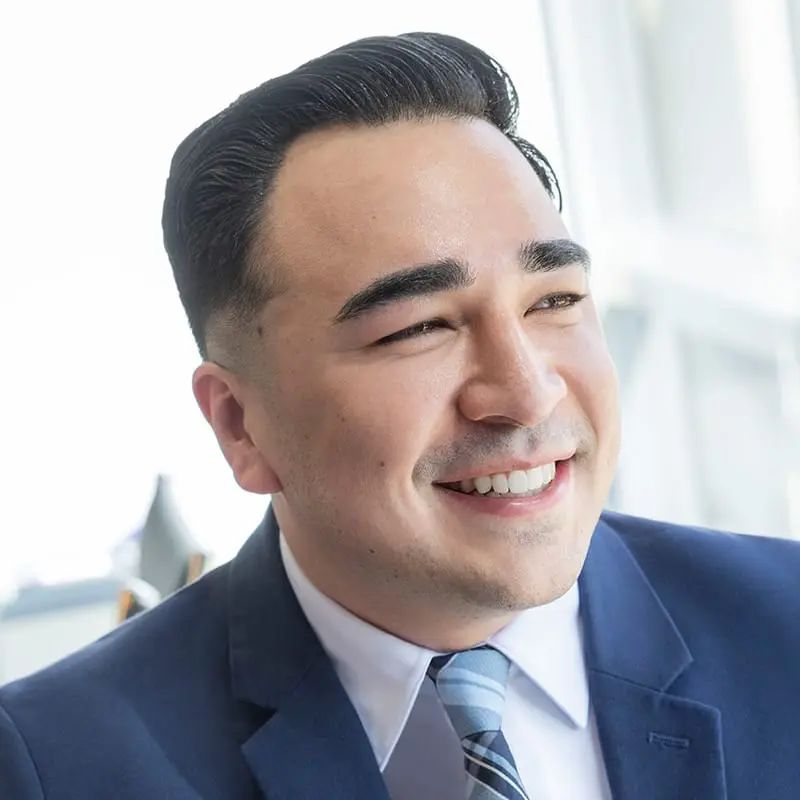

Justin Barrett Wilson
Founding Attorney | Former Collin County Prosecutor
We Offer Complimentary Consultations
If you are facing DWI, assault, sex crime, or other criminal charges, get in touch with My Dallas Criminal Lawyer to learn about your legal options.
My Dallas Criminal Lawyer » How to Choose a Criminal Defense Attorney in Collin County
Short answer: Hire a criminal defense lawyer within the first two weeks after a Collin County arrest, and sooner if you are in jail or under a no-contact order. Choose an attorney who regularly practices in the specific county where your case is filed, ideally one who used to prosecute there, and make sure the person you talk to is the person who will actually work your case. In these courts, the earlier you hire, the more your attorney can still fix.
I am Justin Wilson, the founding attorney at My Dallas Criminal Lawyer in Frisco. Before I defended criminal cases, I prosecuted them for the Collin County District Attorney’s Office, where I served as a misdemeanor court chief and rose to the felony courts. From the prosecutor’s side of the docket room, I watched hundreds of people’s hiring decisions play out. I saw which defense attorneys prosecutors took seriously, which ones judges trusted, and which ones a client should never have paid.
My colleague Kimberly Barclay Palmer spent eight years as a Dallas County prosecutor before joining me in defense work, and our firm defends clients in Collin County courts every week from our office at 5 Cowboys Way in Frisco, minutes from where these cases are decided.
This page is the guide I would hand a family member who had to hire a defense attorney tomorrow: when to hire, how to choose, the questions to ask, the red flags, and how fees and payment plans actually work here. If you would rather just talk it through, call 214-764-5535 for a free consultation. And if you already know you are ready to hire, start with our Collin County criminal defense lawyers page.
Our Frisco office at 5 Cowboys Way STE 300, Frisco, TX 75034, provides easy access for residents throughout Collin County. We also maintain our Dallas headquarters, giving us the resources and reach to handle criminal cases throughout the county while remaining accessible to our Frisco clients.
We offer 24/7 availability for urgent matters, understanding that DWI arrests often occur outside normal business hours. When you need immediate assistance, we are here to help.
The honest answer to "when should I hire a lawyer" is: as soon as you can after arrest, and in most Collin County cases within two weeks. That is not a sales line. Specific doors close on a schedule, and once they close, no attorney can reopen them.
The DWI license deadline. A Texas DWI arrest starts a separate civil case against your driver’s license, and if you refused testing or blew 0.08 or more, you have only 15 days from the date of arrest to request the ALR hearing. Day one is the day of your arrest, so on the calendar the deadline lands two weeks out. We request that hearing for every DWI client we take, and we keep the records proving we met the deadline. We even file the request for clients who gave a consensual blood draw and technically have more time, because we have watched DPS process blood results and hearing requests on nearly the same schedule, and we have watched clients miss the notice letter entirely because it went to an old address or sat in a mail pile. Missing the deadline means a suspension nobody can fight. In our experience, when the arresting officer is properly served with a subpoena and fails to appear at the ALR hearing, the license case gets dismissed, and that happens roughly a third of the time. If you hold a commercial driver’s license, this deadline is everything: a regular driver can get an occupational license to keep driving to work, but a CDL holder cannot get an occupational license to drive a commercial vehicle. For a CDL holder, hiring a Collin County DWI lawyer in the first two weeks can be the difference between keeping a career and losing one.
No-contact orders and protective orders in family violence cases. If you were magistrated at the Collin County jail on an assault family violence charge, you likely left with a no-contact bond condition, and possibly an emergency protective order, that keeps you out of your own home and away from your family. In my experience, Collin County prosecutors rarely agree to modify these orders, and when they do it is usually on the day of a hearing, often only after any pending CPS investigation has closed without findings. Because agreed modifications are rare, nearly everything goes to a contested hearing, and the magistrate court that hears these modifications holds them one morning a week. The practical result is a backlog: from the day we file a request, it typically takes about three weeks to get a hearing, two if we are lucky. Every week you wait to hire is another week added to the time you are paying for a second place to stay. The sooner an attorney files, the sooner you are in line.
High bonds. In serious felony cases, a magistrate may set a bond the family cannot post. We can file for a bond reduction hearing, but the same reality applies: agreements are rare, so it takes time to get in front of a judge. While that clock runs, your loved one sits in jail, cannot work, and cannot help at home. Filing early can save a job.
Bond conditions that block your livelihood. In online solicitation and child pornography cases, bond conditions often prohibit internet access entirely. For someone who works remotely or attends school online, a motion to carve out limited, monitored internet access can be the difference between keeping a job and losing it. That motion has to be filed and heard, which again takes time.
The grand jury window. Felony cases in Collin County are usually presented to a grand jury about four to six months after arrest, sometimes faster. That window is one of the most valuable and most perishable opportunities in a felony case. A well-prepared grand jury packet can persuade grand jurors not to indict at all, or to indict at a lower level, and I have seen both happen. But building one takes real time: our own investigation, sometimes a polygraph, witness interviews by our investigator, and a written presentation prepared for every grand juror. An attorney hired the month the case goes to the grand jury cannot build that. An attorney hired early can. You can read more in our guide to the Texas grand jury process.
When it truly is too late. Two calls I hate getting: the person whose ALR deadline passed before they called anyone, because at that point we can only help with an occupational license, not fight the suspension. And the person who wants to hire a new lawyer days before a trial setting. Trials take weeks or months to prepare, and you cannot count on a judge granting a continuance just because a new attorney appeared. Collin County judges keep their dockets moving. Do not let your case get to either point before you make the call.
Collin County courts hold docket on Wednesday, Thursday, and Friday mornings, and the prosecutors assigned to each court sit in a docket room attached to the courtroom while defense attorneys wait in line to talk to them. Sit in that room for a few years, as I did, and you learn exactly what separates defense attorneys, because you watch all of them work.
There are attorneys who walk in and simply horse trade. They hear the State’s offer and haggle: a few months off the probation, a little more community service, a slightly different fine, without ever engaging with the evidence, as though they have not reviewed it. And there are attorneys who walk in able to talk about the specific evidentiary problems and legal issues in the case. Prosecutors know the difference immediately, and they treat those two attorneys very differently.
There is also a longer game most people never see. After docket, prosecutors go back to their offices and talk to each other: about cases, about which defense attorneys prepare, which ones are strong in trial, and, frankly, which ones will never actually take a case to trial. As a young prosecutor, I learned from more senior prosecutors which defense attorneys always fold, and the lesson that came with it: you can stand firm on your offer with those lawyers, because the trial threat is empty. The reverse is also true. An attorney with a reputation for preparing cases, knowing the law, speaking honestly, and holding their own in a courtroom gets taken seriously on every case they handle, and judges give their arguments more weight because that trust was earned in front of them.
That is the real reason former-prosecutor experience in your specific county matters when you hire. It is not a marketing badge. It means your attorney knows the DA office’s policies and tendencies from the inside, has appeared in front of these judges for years, and has relationships with the court coordinators and bailiffs who make a courtroom run. Those relationships have practical value: I have had clients who realized too late that they could not make it to court before docket closed, and a good relationship with court staff can be the difference between a warrant with a forfeited bond and a simple next-day check-in.
At our firm we cover both sides of the metroplex this way. I started my career at the Collin County DA’s Office. My colleague Kimberly Barclay Palmer started hers at the Dallas County DA’s Office. We both handle cases in both counties, and we trade the insight that comes from having worked inside each one.
Concretely, yes. Here is what regularly practicing in Collin County courts looks like in a real case.
Knowing how each prosecutor negotiates. When you deal with the same prosecutors week after week, you learn who makes a tough first offer and holds it until right before trial, then moves. With that prosecutor, my advice to a client is patience: hold on, the offer we want tends to come late. Other prosecutors make a first offer they genuinely intend as their reasonable final number, and with them I can tell a client honestly that waiting will not change much. Same county, same charge, opposite advice, and the only way to know which situation you are in is experience with the people involved.
Knowing the courts’ rhythms and rotations. Prosecutors rotate between courts and divisions, and how a prosecutor sees your case is shaped by what they handled last. Knowing who is where, and when assignments change, tells a local attorney when the timing is right to push for a better resolution. That kind of timing is invisible to an attorney who is not in these courts regularly.
Knowing the judges’ tendencies. How a court tends to rule on a suppression issue, or whether it will waive an ignition interlock on a DWI deferred, varies from court to court in Collin County, and knowing those patterns changes both strategy and advice. I wrote a full article on one example of this: how ignition interlock waivers actually work in Collin and Denton County.
Knowing what surprises out-of-county lawyers. Attorneys who mostly practice in Dallas County are regularly surprised by Collin County: plea offers are stiffer here, cases move faster, and clients are generally expected to appear at settings where Dallas courts would excuse them, including misdemeanor pretrial settings and suppression hearings. Missing one of those settings in Collin County can trigger a warrant, where the same absence in Dallas is routine. A lawyer who does not know that difference can cost a client a bond.
If your case is in Collin County, start with our complete guide to defending a criminal case in Collin County.
If someone in my family had to hire a defense attorney in a county where I do not practice, these are the questions I would tell them to ask at the consultation, and what good and bad answers sound like.
1. Does your firm have any attorneys who worked at this county’s DA office? The answer you want is yes. Even if the attorney assigned to your case did not prosecute there, a colleague who did can share how that office evaluates cases like yours. At our firm, I bring the Collin County DA background and my colleague Kimberly Palmer brings the Dallas County DA background, and we lean on each other’s counties constantly.
2. Does your firm handle cases in this county on a regular basis? You want an attorney who can say yes without hedging. Knowledge of DA policies and how local judges tend to rule drives the advice that matters most, like whether to elect a jury trial or a bench trial, and whether to have the judge or the jury assess punishment. Those are enormous decisions, and accurate local advice is what makes them informed decisions.
3. Have you handled cases like mine? Your attorney does not need to have handled your exact charge, especially if it is uncommon. But the experience should be in the same family. If you are charged with sexual assault of a child, you do not want an attorney who has never handled a crimes against children case. If you are charged with aggravated assault with a deadly weapon, you do not want someone who has never defended a felony. An attorney who has tried an aggravated assault where a client shot someone can step up to a murder case; an attorney who has never touched a felony cannot.
4. Am I talking to the attorney who practices in this county, or to a salesperson? Make sure the person across the table actually appears in the courts where your case will be filed. An attorney who practices there can tell you how things really go in those courts. A closer cannot.
5. Will you work on my case, and who else will? A firm where multiple attorneys genuinely work cases together is a good thing. Busy firms sometimes have docket in two counties at the same hour, and one lawyer cannot be in two places at once. Two attorneys who both know your file and discuss strategy give you better, more attentive service. What you are screening for is different: the consultation attorney whose involvement ends the moment the contract is signed.
6. What would your approach be to defending my case? Give the attorney an honest rundown of what led to your arrest, and listen. A skilled defense lawyer should be able to sketch at least a preliminary strategy on the spot. It will come with caveats, and it should, because the strategy will evolve once the evidence arrives. But if there is no strategy at all, keep looking.
Guaranteed outcomes. No attorney can guarantee a dismissal, or any result, before seeing all the evidence, and the good ones will not pretend to. There is an important difference between "based on what you have told me, here is a possible strategy for getting this dismissed" and "I will get this dismissed." The first is a professional giving you a preliminary read. The second is a sales pitch dressed up as law.
Everything you want to hear. Criminal defense attorneys owe clients honest counsel, and honest counsel regularly includes things a client does not want to hear. A good attorney can name the bad facts in your case and, in the same conversation, lay out how the defense deals with them. If every answer in the consultation is exactly what you hoped to hear, you are likely being recruited, not counseled.
Promises that do not exist in Collin County. Some pitches are a dead giveaway that an attorney does not actually practice here. An attorney who talks about DWI dismissals in Collin County like they are routine either does not know this county or is not being honest with you. The same goes for anyone who suggests they can get a DWI reduced to obstruction of a highway here; when I was a prosecutor, an attorney asking for an obstruction in the docket room instantly marked them as someone who does not regularly practice in Collin County. So does asking for pretrial diversion on an assault family violence charge.
The sales-attorney model. Some high-volume firms are built around consultation attorneys whose only job is signing clients. They may not practice in the local courts at all, and in some of these firms the sales attorney and the local attorney who actually receives the case work in separate departments and never speak. We have met people who hired a firm based on a consultation attorney’s promises, then learned from the attorney actually assigned to the case that what was promised cannot be done here. One example we have seen promised: "hire us and we will get your warrant lifted so you never have to go to jail." Texas law now requires a magistrate to review a public safety report before setting bond, on the record, which as a practical matter means a person with a warrant goes through the jail and sees a magistrate. The days when a lawyer could call a judge over the weekend and quietly get a bond set are gone. A promise built on how things used to work is not a service, it is bait.
Too cheap to say no. Some local volume firms will sign a case for no money down, or a few hundred dollars. It feels like a kindness in a hard week. But a firm that takes every case for nothing down usually runs on volume, and firms that run on volume tend to withdraw from your case the moment an installment payment fails. Cheapest at signing is often the most expensive by the end.
Criminal defense fees are not covered by insurance, and almost nobody has a defense fund sitting in savings. So let me explain how fees actually work, and why hiring early gives you more room, not less.
Flat fees, explained honestly. On the vast majority of our cases we charge flat fees rather than hourly billing, plus a small administrative fee that supports our staff. The legal fee has two parts. The pretrial fee covers all the work it takes to move your case to an agreed resolution: the investigation, the evidence review, the negotiations, the hearings. The trial fee is separate and only comes into play if you choose a trial, whether on guilt or on punishment. You are never paying for a trial you do not have.
Why hiring early makes fees easier, not harder. Here is the part few people understand until they are inside it. Collin County courts run on a schedule. A misdemeanor court here typically gives about 90 days from first appearance to the setting where you either enter a plea or set the case for trial; some give 60, and the felony courts typically give 90 to 120. Our pretrial fee needs to be paid in full by that plea-or-set-for-trial setting, because that is the moment the biggest decisions get made. So the math is simple: a client who hires us within days of arrest, months before the first court appearance, can often spread the pretrial fee across a down payment and four or five monthly installments. A client who calls us days before their first appearance has two or three payments at most, because the court’s calendar, not ours, sets the deadline.
Payment plans, and what happens when life happens. We offer installment payment plans on most cases, and when a client hits a rough month, we work with them, as long as they communicate with us. Hiring early is what creates that flexibility: with months of runway, a payment plan can bend. Hired at the last minute, there is no runway left to bend.
Why you cannot count on the judge for more time. Some lawyers will tell you the judge will just give another setting if you need more time to pay. In Collin County, do not count on it. These judges pride themselves on running efficient dockets, among the most efficient of any metro county in Texas, and they will rarely drag out a case just so an attorney can finish getting paid. That matters most at trial time: trials here are usually set 60 to 90 days out from the day you announce, the trial fee has to be paid before we can fully prepare, and a trial fee can be divided into two payments at most. A client who finished their pretrial payment plan months earlier can save toward that decision. A client who hired late and is still paying the pretrial fee faces both at once.
If you are comparing firms on price, ask every firm the six questions above about who will actually work the case, and ask exactly what the quoted fee covers. A clear, honest fee structure is itself a sign of how a firm practices.
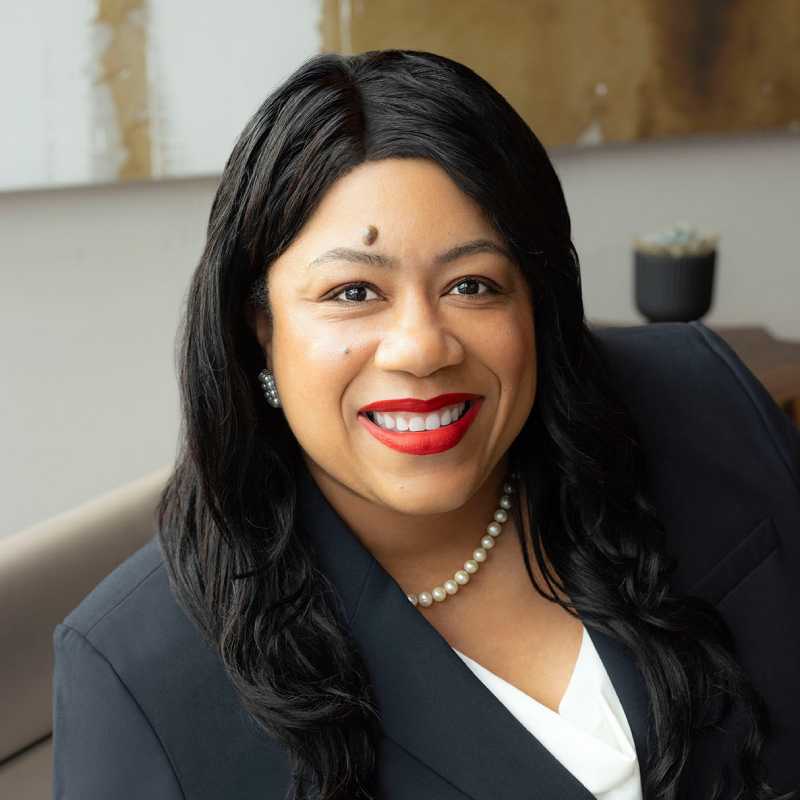
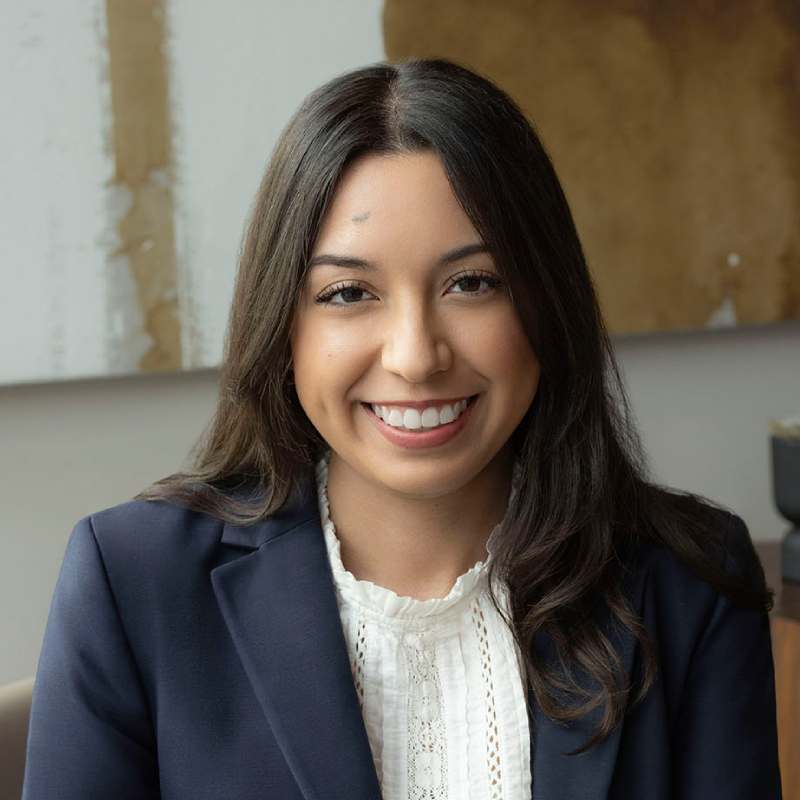
You should know exactly what you are buying, so here is how our firm works. We are a five-person team: myself; my colleagues Kimberly Barclay Palmer and Justin Harris, both seasoned trial attorneys who have handled cases at every level; Anyssa Medrano, our paralegal; and Heidi Stark, our Director of Strategic Initiatives. Every case has a primary attorney, and it is the attorney who sat with you at the consultation, not a stranger assigned afterward. The primary attorney leads, a second attorney works the case alongside them, and the whole team can see the file.
Communication runs the same way. Clients text one number and the entire team sees the message, so questions get answered instead of waiting on one person’s voicemail. Most mornings our attorneys are in court representing clients; most afternoons they are calling clients, reviewing evidence with them, and meeting new ones. During office hours Anyssa or Heidi answer the phones and either get you an answer or get you scheduled with your attorney. Updates happen by text, call, email, Zoom, or across the table, whichever the situation calls for.
You sign your contract electronically, from your phone if you like. The day the contract is executed and the initial payment processes, the clock starts: we file letters of representation, request the ALR hearing in DWI cases, file the motion to modify the protective order or bond conditions in family violence cases, and request the probable cause affidavit in felony cases so we can see what the State claims to have.
We will ask you for a short list of things: your statutory warning paperwork from a DWI arrest, your bond conditions and any protective order, and any case numbers or court dates you already have.
From there the work branches by case. If we are fighting bond conditions or seeking a bond reduction, we prepare you and any witnesses for the hearing. In family violence cases, we counsel the complaining witness’s side about an affidavit of non-prosecution at the right time, done carefully rather than rushed, because it is effectively a one-shot document. In cases involving children, our investigator typically goes to work immediately: school and counseling records, any CPS history, and witness interviews, all months before the State expects a defense to exist.
The measure of a well-run defense firm is simple: how fast does your life start moving back toward normal? You will not have to chase us for updates, and you will always know what the next event on your case is.
Choosing an attorney is ultimately a bet on how they perform, so look at performance. Our recent Collin County outcomes include a jury not guilty verdict on a Plano PD DWI, a jury not guilty on a Frisco PD DWI second, a felony DWI resolved through Collin County’s DWI Court program instead of a prison sentence, an assault family violence charge dismissed after the 911 evidence fell apart, and grand jury no-bills won with defense packets in felony cases. Every case is different and past results never guarantee future outcomes, but a pattern of preparation shows. You can review more on our Collin County case results page.
We have published detailed guides to how criminal cases actually work in these courts: defending a criminal case in Collin County, our Collin County DWI defense and Collin County assault family violence defense pages, the Texas grand jury process, and how ignition interlock waivers work in Collin and Denton County. The more you read, the better your questions will be, whoever you hire.
Within the first two weeks, and sooner if you or a loved one is in jail or under a no-contact order. In DWI cases the ALR license hearing must be requested within 15 days of arrest. In family violence cases, contested bond and protective order hearings in Collin County take roughly two to three weeks to reach a courtroom after filing, so every week of delay extends the time you are kept from your home.
Most reputable firms, ours included, charge flat fees rather than hourly billing: a pretrial fee covering all work toward a resolution, and a separate trial fee only if you choose a trial. The total depends on the charge level and what the case needs, and any firm you interview should explain its fee clearly at the consultation, before you commit.
Yes. On most cases we offer a down payment followed by monthly installments. The earlier you hire, the longer the plan can run, because the pretrial fee must be paid in full before the court’s plea-or-set-for-trial setting, which in Collin County typically arrives 60 to 120 days after first appearance. Hiring early is what makes a longer, gentler payment plan possible.
Six matter most: Has anyone at the firm prosecuted in this county? Does the firm practice here regularly? Have you handled cases like mine? Am I talking to the attorney or to a salesperson? Who will actually work my case? And what would your approach be to defending it? A strong attorney answers all six directly.
No, and you should walk away from anyone who does. No attorney can promise an outcome before reviewing all the evidence. What a skilled attorney can do is give you a preliminary strategy at the consultation and refine it as the evidence comes in.
It matters more than most people expect. Collin County moves faster than neighboring counties, plea offers run stiffer, judges expect defendants to appear at settings other counties excuse, and missing one can trigger a warrant. An attorney who practices here regularly knows the prosecutors’ negotiating patterns and the judges’ tendencies, and that local knowledge directly shapes the advice you get.
Ask. At some high-volume firms, the persuasive attorney at the consultation never touches the case again, and at some, the consultation attorney does not practice in the local courts at all. At our firm, the attorney who consults with you is your primary attorney, and a second attorney works the case with them.
Usually not, but options narrow. Days before a first appearance, payment plans get shorter. Days before a trial setting, a new attorney may be unable to prepare in time, and Collin County judges rarely grant continuances just because counsel changed. If the ALR deadline has passed, the license suspension can no longer be fought. Whatever your date is, call before it gets closer.
Collin County
May 2026
Dismissed
Assault Causes Bodily Injury Family Member
Collin County
May 2026
Dismissed
Assault Causes Bodily Injury Family Member Class A
Collin County
May 2026
Dismissed
Robbery
Collin County
April 2026
Dismissed
Tampering with Evidence
Collin County
April 2026
Dismissed
Assault Family Violence
Collin County
April 2026
Refused
Assault Family Violence
Denton County
March 2026
Refused
Continuous Assault Family Violence
Collin County
April 2026
Dismissed
Tampering with Evidence
Eddie C.
Justin is a truly talented lawyer. His ability to think critically, and analyze quickly, are just a couple of traits that make him an excellent advocate for anyone charged with a crime. I’ve sat next to him in the courtroom and it is truly amazing to see him connect with a jury. He is an absolute pro.
Kamran V.
This law firm did an outstanding job for me. From start to finish, they were professional, knowledgeable, and supportive. They delivered exactly what they promised, and I couldn’t be happier with the result. I highly recommend them to anyone who needs legal help.
Thomas A.
Justin Wilson and Justin Harris were amazing. Highly recommend them.
Lybbie
I trust Justin for any legal related questions and he certainly delivers. I recommend him 100% as he is committed to you from start to end- no matter the situation.
Cristal D.
Absolutely the best team you could ask for. From start to finish, the entire office was professional, compassionate, and truly dedicated. They made me feel heard, respected, and confident during one of the most stressful times of my life. Their communication was consistent, and you can tell they genuinely care about their clients and their outcomes.
If you’re looking for a lawyer who is sharp, honest, and will fight for you like it’s personal – this is the team you want on your side. I can’t thank them enough for everything they did. They truly are the best in the business.
Natalie M.
Justin Harris was an exceptional lawyer- he is hardworking and dedicated and will reach your needs and more.
He was reliable and professional in every way. He makes sure that you are not only heard but seen. When working with Justin- it gave me strong trust that he cared and that he is a man of his word.
Highly recommend this law firm. Justin and the team handled my case with the upmost care, always kind and professional, and let me know all the details every step of the way.
Prof. Carlos R.
My first impression with Justin and Heidi was that they are a first class law firm, very professional and very open to answering questions and making a person feel appreciated. I am glad I met both at Formation in Frisco Texas.
Alex C.
I have come to know Justin and his team through my practice as a civil lawyer, and Justin has always impressed me with the way he treats his clients, and his ability to clearly explain options. He works tirelessly to be prepared for all his cases, and always treats others with professionalism and respect.
Joshua J.
Justin is a super professional lawyer with positive results. I would refer Justin to any one who needs help with anything. Justin gets it done with positive results.
Yoker V.
I highly recommend Justin 100%, the total positive experience started the moment we first spoke. Justin is a complete and total professional and a highly skilled lawyer outside and especially inside the courtroom. My case had its challenges but Justin skillfully did his research and presented the court and jury a master class. At the end of the trial the judge looked at the prosecutor and said, ” That’s how it’s done.” YLV
If you have read this far, you know what to ask any firm you interview, including ours. When you call us, you will talk to an attorney who practices in the Collin County courts, you will hear a preliminary strategy for your case, and you will get a straight answer about fees and payment plans before you commit to anything.
Arrested or under investigation in Collin County? Call 214-764-5535 for a free consultation with a Collin County criminal defense lawyer who has worked these courts from both sides.
My Dallas Criminal Lawyer, 5 Cowboys Way, Suite 300, Frisco, TX 75034. Defending clients in Frisco, Plano, McKinney, Allen, Wylie, Prosper, Celina, and throughout Collin County.
| Our team is available by phone 24/7 | Office Hours |
|---|---|
| Monday | 8AM – 5PM |
| Tuesday | 8AM – 5PM |
| Wednesday | 8AM – 5PM |
| Thursday | 8AM – 5PM |
| Friday | 8AM – 5PM |
| Saturday | Closed |
| Sunday | Closed |
| Our team is available by phone 24/7 | Office Hours |
|---|---|
| Monday | 8AM – 5PM |
| Tuesday | 8AM – 5PM |
| Wednesday | 8AM – 5PM |
| Thursday | 8AM – 5PM |
| Friday | 8AM – 5PM |
| Saturday | Closed |
| Sunday | Closed |
| Our team is available by phone 24/7 | Office Hours |
|---|---|
| Monday | 8AM – 5PM |
| Tuesday | 8AM – 5PM |
| Wednesday | 8AM – 5PM |
| Thursday | 8AM – 5PM |
| Friday | 8AM – 5PM |
| Saturday | Closed |
| Sunday | Closed |