
Plano DWI Lawyer

A Former Prosecutor Who Trained in the Courtroom With Plano PD

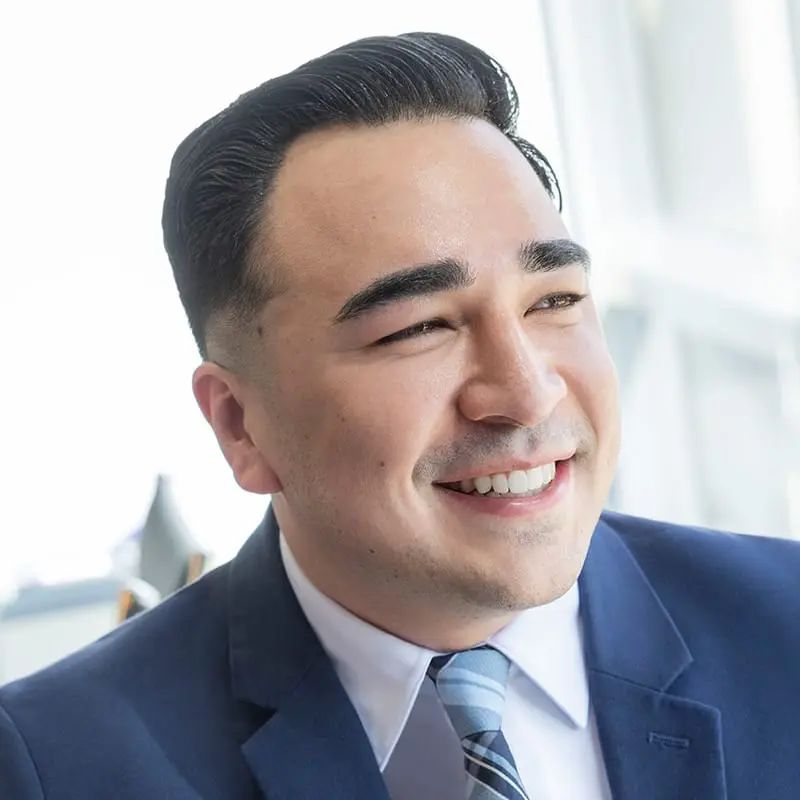
If you were arrested for DWI in Plano, you were arrested by the police department that takes DWI enforcement more seriously than any other agency in Collin County, and your case will be decided in a court system we know from both sides. I am Justin Wilson, the founding attorney at My Dallas Criminal Lawyer. Before defending DWI cases, I prosecuted them for the Collin County District Attorney’s Office, where I served as a misdemeanor court chief, rose to the felony courts, was assigned to the county’s DWI/Drug Court program, and taught the DWI investigation section at the police academy. I hold a certification in administering the standardized field sobriety tests, the same tests the officer used on the roadside the night of your arrest. My colleague Kimberly Barclay Palmer brings the same background from eight years as a Dallas County prosecutor, including service as a misdemeanor court chief and felony prosecutor.

In 2025 and 2026, readers of The Dallas Morning News voted our firm the back-to-back Gold Winner for Best DUI | DWI Lawyer in the Best in DFW People’s Choice Awards.

I also know Plano PD’s training from the inside. When I was a prosecutor, Plano PD ran something no other Collin County agency did: practice sessions where volunteer prosecutors were served alcohol in a controlled environment so Plano officers could practice administering field sobriety tests on live subjects, followed the next day by mock trials at the Collin County Courthouse, where those same officers practiced testifying on direct examination and being cross-examined. I watched how these officers are taught to investigate a DWI and how they are taught to testify about it. A defense built for the average police agency does not fit Plano. Call 214-764-5535 for a free consultation with a Plano DWI attorney who knows exactly where a well-trained officer’s case can still fail.

Why Choose My Dallas Criminal Lawyer for Your Plano DWI Case

The Former Prosecutor Advantage, Applied to Plano

I did not just prosecute DWI cases in the courts where your case will land. I prosecuted the cases this specific department built, worked alongside its officers, and learned how the Collin County DA’s Office evaluates a Plano PD file. I know how offers get made on these cases because I made them. That experience helps us find the technical weaknesses in a well-built Plano case that other attorneys might not focus on, and the professional relationships it created within the Collin County legal community, grounded in mutual respect and credibility, matter during negotiations and in the courtroom.

A Jury Not Guilty Against a Plano PD DWI Case

Our recent results include a jury not guilty verdict in a DWI case built by the Plano Police Department, a jury not guilty on a Frisco DWI second, a DWI/Drug Court graduation that ended in dismissal, and dismissals and reductions across the Collin County courts. You can read them all on our Collin County case results page. Every case is different and no outcome can be promised, but we prepare every Plano DWI as if a jury will decide it, because that preparation is also what produces the best dismissals and reductions.

A Frisco Office Minutes Up the Tollway

Our Frisco office at 5 Cowboys Way STE 300, Frisco, TX 75034 sits just up the Dallas North Tollway from Legacy West and the Shops at Legacy, the heart of Plano’s west side DWI enforcement. We are easy to reach from anywhere in Plano, and we make ourselves available when your case needs us, including for the short deadlines that follow an arrest.

Frisco Office 5 Cowboys Way STE 300, Frisco, TX, 75034 214-764-5535
Table Of Contents
    Justin Barrett Wilson, criminal defense attorney and former Collin County prosecutor

    Where Plano DWI Arrests Actually Happen

    Plano DWI enforcement is not random. It concentrates in two corridors, and after years of defending these cases we know both of them street by street.

    The west side corridor runs between the Dallas North Tollway and Preston Road. The epicenter is the Shops at Legacy, with a secondary pocket of enforcement down around Preston and Park, where there is more entertainment and nightlife.

    The east side corridor runs from U.S. Highway 75 over to Avenue K, with the heaviest concentration around old downtown Plano, where many of the city’s bars sit on 14th and 15th Street.

    Here is a detail that surprises people: on the west side, the enforcement is overwhelmingly focused east of the Dallas North Tollway, at the Shops at Legacy, and not at Legacy West itself. Legacy West is mostly shopping and restaurants that happen to serve alcohol, and those restaurants tend to close around 11 p.m. or midnight. The east side of the Tollway at the Shops at Legacy has actual bars, some open until 2 a.m., and that is where the DWI patrols spend their time.

    That said, we defend DWI cases from all over Plano. The officers know every area of the city where bars stay open late, and the streets around those bars are heavily patrolled. Wherever you were stopped, the patterns described on this page shaped how your case was built.

    The Shops at Legacy: How These DWI Stops Start

    We have defended a large number of DWI cases that started at the Shops at Legacy, and the same handful of stop reasons appear over and over.

    Rolling stop signs. Unlike Legacy West, which is essentially one long street with shops, restaurants, and parking garages on either side, the Shops at Legacy has many small side streets with bars tucked into them, which means many stop signs and small intersections. People treat them casually because they are inside a quiet shopping district with little traffic. The officers know that all they need to see is one vehicle fail to come to a complete stop, and that justifies a traffic stop.

    Headlights during the holidays. Around Christmas, the trees throughout the Shops at Legacy are wrapped in lights, and the area gets genuinely bright at night. Every year we see DWI cases that started because a driver could see perfectly well and never noticed the headlights were off. If automatic headlights are not on, that oversight becomes the traffic stop.

    The exit at Bishop and Legacy Drive. There are only a couple of primary ways out of the Shops at Legacy, and officers watch the stoplight at Bishop turning onto Legacy Drive closely because it is the main one. A missed turn signal, or a right turn on red without a complete stop, is all it takes.

    Sleeping drivers. People who decide not to drive and instead sleep it off in a parked vehicle are heavily targeted in this area. More on how we fight those cases below, because Plano handles them in a very particular way.

    One more thing worth knowing: Plano PD has its own substation at the Shops at Legacy, and officers assigned specifically to DWI patrol circle the area steadily from about 10 p.m. on. This is not a place where a DWI arrest happens because an officer wandered through. It is patrolled for exactly that purpose.

    Old Downtown Plano: Highway 75 and Avenue K

    The east side corridor works differently but produces just as many arrests. The bars along 14th and 15th Street sit in a genuine old downtown: tight streets, close intersections, and plenty of chances to miss a complete stop or a turn signal. Some of these bars are open until 2 a.m.

    Downtown Plano is also where the Plano Police Department keeps its main headquarters. Even officers who are not working that sector pass through regularly, especially heading back to the station at the end of a shift, so the police presence around those bars is constant.

    And just like the west side, we see sleeping driver cases here: someone does the responsible-feeling thing, stays parked, and keeps the engine running for the air conditioner or the heater. Those cases raise some of the most winnable legal issues in Plano DWI defense, and we treat them that way from day one.

    Plano Takes DWI More Seriously Than Any Other Collin County Agency

    Plano is the largest city in Collin County, and its numbers show a department that has made DWI a priority. The arrest statistics published by the Texas Department of Public Safety have long shown Plano leading the county in DWI arrests, for years at nearly double the volume of Frisco, with every other agency below that. Frisco has been catching up, but the point stands: if you were arrested for DWI in Plano, you were arrested by the agency that does this the most.

    Plano also invests more in training than the smaller departments do. The field sobriety practice sessions and courthouse mock trials I described above are unique to Plano PD among Collin County agencies. Their officers get real reps investigating impaired drivers and real reps testifying under cross-examination before they ever handle your case. The department is also unusually integrated with the Collin County DA’s Office: Plano PD keeps its own liaison to the DA’s Office, and when I was a prosecutor there was a Plano officer with a dedicated office inside the DA’s Office as the department’s point of contact.

    Why say all of this on a defense lawyer’s website? Two reasons. First, honesty: in Plano you are less likely to see the big, egregious police mistakes we sometimes find in agencies that rarely work DWI cases, and any attorney who promises you a sloppy-cop defense in a Plano case has not handled many of them. Second, that tight integration can actually help you. When an officer has credibility problems that must be disclosed to the defense, or when discovery did not make it from the department to the prosecutor, the close relationship between Plano PD and the DA’s Office usually means we get what we are entitled to faster and more reliably than we do from departments with looser lines of communication.

    How We Fight Plano DWI Cases

    Because Plano officers are better trained, the winning fights in a Plano DWI are usually technical, and that is exactly where a former DWI prosecutor is most useful.

    The field sobriety tests, graded strictly. Standardized field sobriety tests only mean something if they are administered and scored exactly by the book. We break down the video frame by frame against the standards the officer was trained on: instructions, timing, clues, scoring. Well-trained officers make fewer errors, but they still make them, and every deviation is leverage.

    The timing of alcohol absorption and elimination. A blood alcohol concentration number drawn an hour or more after driving is not the same thing as your alcohol concentration while driving. The science of absorption and elimination often leaves real doubt about what your level was at the only moment that matters, the moment you were behind the wheel.

    The operating element in parked-car cases. If you were asleep in a parked vehicle, the State still has to prove you operated it while intoxicated, and it has to connect any intoxication to the time you actually drove. That temporal link is often the weakest part of these cases, and we attack it hard.

    Detentions that come before the evidence. Here is a pattern we see in Plano more than anywhere else. A 911 caller reports someone asleep in a vehicle at a stoplight or in a drive-thru. The caller usually says nothing about alcohol; nobody knows whether the person is intoxicated, exhausted, or having a medical emergency. Two Plano patrol units arrive, and before anyone checks on the driver’s welfare, the officers take the time to inch their vehicles into position until their grill guards are touching the front and back bumpers, boxing the vehicle in.

    The State typically defends that boxing-in under the community caretaking exception, the doctrine that lets officers check on a person’s well-being. Our response writes itself: officers who were supposedly worried about a medical emergency did nothing to evaluate one. They saw no open container and had no evidence of alcohol at all. They simply assumed they had a drunk driver and detained the person first. We litigate these detentions through motions to suppress, and when a court agrees the stop was unlawful, everything gathered afterward is thrown out, which as a practical matter usually ends the case. We will be straight with you: results on these motions vary from court to court, with some courts focusing on the missing evidence and others crediting the safety rationale. Knowing how these arguments have actually fared in the Collin County courts, and shaping the motion accordingly, is a large part of what you are hiring when you hire us.

    The Portable Breath Test and the Blood Warrant

    Plano officers, especially the ones working the Shops at Legacy area, use the portable breath test (PBT) more than almost any officers we see, and some use it on nearly every stop. This is the small handheld device offered in the field, before any arrest. Here is what most drivers do not know: the number on a PBT is not admissible at trial. At most, the device can show the presence or absence of alcohol. But if you refuse a blood draw and the officer applies for a search warrant, that PBT result can absolutely go into the warrant affidavit.

    We have represented many clients who looked good on video: a minor traffic stop, clear speech, solid balance, a genuinely defensible case on probable cause. Then they blew into the PBT, the device showed a number over the limit, and that single reading is what saved the officer’s search warrant. You are allowed to decline the portable breath test, and declining it is one of the few decisions during a stop that can preserve your best defenses. Declining the roadside PBT is not the same thing as the formal breath or blood refusal that carries license consequences; it is a screening tool, and you do not have to help the officer build the affidavit.

    And understand this about refusals: some agencies give up when a driver refuses a breath or blood test. Plano does not. The department has well-established procedures and a deep rotation of on-call judges, in both Collin County and the Plano Municipal Court, who will answer the phone in the middle of the night and review a warrant application. If you refused, assume they got a warrant and drew blood. That does not mean the case is over. It means the fight moves upstream: to the traffic stop itself, to the probable cause recited in the warrant affidavit, to how the field sobriety tests were administered, and to what that blood number actually proves about your level at the time of driving. Those are the battles we prepare for from the first day.

    The ALR Hearing, Your License, and the Occupational License

    A Plano DWI is two cases. The criminal case decides guilt. The civil ALR case decides whether your driver’s license gets suspended, and you have as little as 15 days from your arrest to request the hearing that stops an automatic suspension. Call us before that clock runs out.

    The ALR hearing has a Plano-specific wrinkle that cuts both ways. Serving a subpoena on a Plano officer is easy, because the department designates a person who accepts subpoenas on behalf of all of its officers. And in our experience Plano officers actually show up to ALR hearings more reliably than officers from many other agencies. When an officer fails to appear, the ALR case is dismissed and there is no suspension. When the officer does appear, we get something almost as valuable: sworn testimony about your stop and arrest, on the record, months before the criminal case is decided. Either outcome, handled correctly, moves your defense forward.

    And if your license does get suspended: the occupational driver’s license. An ALR suspension does not have to mean you stop driving. We can petition for an occupational driver’s license (ODL) that allows you to keep driving for work and other essential needs, and the petition can be filed in the Justice of the Peace precinct where you live or where you were arrested. For Plano PD arrests, that means the Plano Justice of the Peace court, Collin County JP Precinct 3, and that is genuinely good news. In our experience, the Plano JP court has the fastest turnaround for approving occupational driver’s licenses of any court we work with, and they are very easy to work with. Once we have collected the documents we need from you, we can usually have your occupational license approved within a day or two of filing.

    Your Plano DWI Will Be Decided in the Collin County Courts

    First, a recent shift worth knowing about. Magistration, the initial appearance where a judge advises you of the charges and sets bond, used to take place at the Plano jail every morning. For the last year or so, though, we have been seeing Plano arrests transferred to the Collin County jail, with magistration handled there. These days, the realistic expectation is that if you are arrested for DWI in Plano, you will see a magistrate at the Collin County jail once you have been transferred.

    The case follows the same path. Plano PD makes the arrest, but the charge is filed with the Collin County District Attorney’s Office and prosecuted at the courthouse in McKinney, in the county’s misdemeanor courts or, for felony charges, its district courts. For repeat and felony DWI clients whose real problem is addiction, Collin County also runs a specialty DWI/Drug Court program built around treatment rather than incarceration, and we know how to evaluate whether it fits your situation. We have written a complete, first-hand breakdown of how these courts, the DA’s Office, and the chemical evidence actually work on our Collin County DWI lawyer page. If you want to understand the system your case just entered, start there.

    Plano DWI Resources From a Former Prosecutor

    We have published detailed, first-hand guides to this exact court system. Our complete guide to DWI in Collin County covers magistration by agency, bond conditions, ALR strategy, and how outcomes really get negotiated here. If you are weighing deferred adjudication, read our guide to interlock rules for DWI deferred adjudication in Collin and Denton County. And for proof of what preparation does, start with our Plano DWI jury trial not guilty, then browse the rest of our Collin County case results.

    And if you or someone you love is facing a charge beyond DWI, my colleague Kimberly Palmer and I defend the full range of criminal cases in these same courts. Start with our Plano criminal defense lawyers page or our county-wide Collin County criminal defense lawyer page.

    Still comparing attorneys? Read our former prosecutor’s guide to how to choose a criminal defense attorney in Collin County: the six questions to ask, the red flags to avoid, and what actually matters in these courts.

    Frequently Asked Questions About Plano DWI Cases

    Two corridors produce most Plano DWI arrests: the west side between the Dallas North Tollway and Preston Road, centered on the Shops at Legacy with a smaller pocket near Preston and Park, and the east side between U.S. 75 and Avenue K around old downtown Plano, where bars line 14th and 15th Street. Enforcement concentrates wherever bars stay open until 2 a.m., especially after about 10 p.m.

    You are allowed to decline the portable breath test (PBT), and there are good reasons to. The PBT number is not admissible at trial, but if you later refuse a blood draw, that roadside reading can be used in the officer’s search warrant affidavit. We have seen otherwise defensible cases lost at the warrant stage because of a PBT. Declining the roadside PBT is a separate decision from the formal breath or blood test refusal that carries license consequences.

    Yes, count on it. Plano PD has established warrant procedures and a rotation of on-call judges in Collin County and the Plano Municipal Court who review applications at any hour. Refusing does not stop the blood draw; it changes where the legal fight happens, moving it to the stop, the warrant affidavit, and the meaning of the blood result.

    Yes, and in Plano you probably will be, because sleeping-driver cases are targeted here, particularly around the Shops at Legacy and downtown. But these are often the most defensible DWI cases we handle. The State must prove you operated the vehicle while intoxicated and connect your intoxication to the time you drove, and the way Plano officers detain sleeping drivers, sometimes boxing the vehicle in before checking on the person’s welfare, can support a motion to suppress that ends the case.

    Plano DWI cases are prosecuted by the Collin County District Attorney’s Office at the courthouse in McKinney: misdemeanor DWI charges in the county’s misdemeanor courts and felony charges, like a third DWI, in the district courts. Even magistration, the initial appearance where bond is set, now typically happens at the Collin County jail: for the last year or so, Plano arrests have been transferred there rather than magistrated at the Plano jail.

    Not automatically, but the deadline is short: you have as little as 15 days from arrest to request the ALR hearing that prevents an automatic suspension. In Plano cases we can serve the officer reliably because the department designates a subpoena contact, and if the officer fails to appear, the ALR case is dismissed. Even if a suspension does happen, an occupational driver’s license keeps you driving: for Plano arrests it can be filed in the Plano JP court, Collin County JP Precinct 3, which in our experience has the fastest ODL turnaround of any court we work with, usually approving within a day or two of filing once your documents are together.

    Sometimes, but nobody can honestly promise that, and Plano cases are rarely dismissed because of a sloppy investigation, since Plano PD trains its officers better than most agencies. Dismissals in Plano cases usually come from technical challenges: suppression of an unlawful stop or detention, errors in field sobriety testing, problems with the warrant affidavit, or a blood result that cannot prove your level at the time of driving. An attorney who knows where those seams are is the difference.

    Texas primarily uses DWI (Driving While Intoxicated) for adult offenses. DUI typically applies to minors under 21 with any detectable alcohol. Both charges can carry serious consequences, and legal representation is important to protect your rights and future.

    Plano DWI Practice Areas

    Driving While Intoxicated (DWI)

    DWI – First Offense

    A first-time DWI begins as a Class B misdemeanor. If your blood alcohol concentration (BAC) is below 0.15, the charge will remain a a Class B misdemeanor. Penalties can include up to six months in jail or up to two years of probation and up to a $2,000 fine. Your license may be suspended for up to a year. However, an experienced attorney can work to protect your rights and keep your license.

    DWI with BAC 0.15 or Higher icon

    DWI with BAC 0.15 or Higher

    If your BAC is 0.15 or higher, the charge becomes a Class A misdemeanor. Penalties are more severe, including up to a year of jail time, $4,000 in fines, and a mandatory ignition interlock device. You may lose your license for two years and attend DWI education. We challenge chemical tests and observational evidence to protect your record.

    DWI – Second Offense icon

    DWI – Second Offense

    A second DWI is also a Class A misdemeanor. In addition to jail time, license suspension, and fines, convictions can result in community supervision and DWI education for repeat offenders. We dig into your prior case to challenge its use as a prior conviction and work to reduce penalties wherever possible.

    Driving While Intoxicated (DWI)

    Felony DWI

    Certain circumstances turn a DWI into a felony, including: A third or subsequent DWI offense, Causing serious injury (intoxication assault), Causing death (intoxication manslaughter), Driving drunk with a child under 15 Felony DWIs can lead to years in prison and up to a $10,000 fine. We build comprehensive defenses and fight to reduce or dismiss your charges whenever possible.

    DWI with Child Passenger icon

    DWI with Child Passenger

    Driving while intoxicated with a child under 15 in the vehicle is a state jail felony. Penalties include up to $10,000 in fines and up to two years in state jail. Worse, these charges often lead to CPS involvement, which can result in the loss of your custody rights. Our firm works quickly to protect your rights as well as your family relationships.

    Icon of a hand covering a mouth, symbolizing silence or a gag

    Intoxication Assault

    If you were driving while intoxicated and caused serious bodily injury, you can be charged with intoxication assault. This is a third-degree felony that can result in up to a decade in prison, $10,000 in fines, and a long-term license suspension. We can examine accident reports, challenge expert testimony, and review medical records to fight this serious accusation.

    JUVENILE CRIMES

    Intoxication Manslaughter

    Intoxication manslaughter applies when someone dies due to a DWI-related crash. This second-degree felony is punished by up to 20 years in prison, $10,000 in fines, and long-term license revocation. Because the consequences are life-altering, we aggressively investigate and advocate for the best possible outcome.

    Icon representing a courthouse or legal building.

    Public Intoxication

    Though not technically a DWI, public intoxication is still a criminal offense. You can be charged if you’re in public and intoxicated enough to be a danger to yourself or others, even if you never get behind the wheel. Bars, restaurants, and common areas in apartment buildings are all considered “public” under the law. If convicted, you’ll face a $500 fine and possible overnight detention. However, even minor Class C misdemeanors will show up on background checks. We work to resolve the charges without a conviction whenever possible.

    Collin County

    May 2026

    Dismissed

    Assault Causes Bodily Injury Family Member

    Collin County

    May 2026

    Dismissed

    Assault Causes Bodily Injury Family Member Class A

    Collin County

    May 2026

    Dismissed

    Robbery

    Collin County

    April 2026

    Dismissed

    Tampering with Evidence

    Collin County

    April 2026

    Dismissed

    Assault Family Violence

    Collin County

    April 2026

    Refused

    Assault Family Violence

    Denton County

    March 2026

    Refused

    Continuous Assault Family Violence

    Collin County

    April 2026

    Dismissed

    Tampering with Evidence

    What Our Clients Say
    MDCL-Icon

    Eddie C.

    star

    Justin is a truly talented lawyer. His ability to think critically, and analyze quickly, are just a couple of traits that make him an excellent advocate for anyone charged with a crime. I’ve sat next to him in the courtroom and it is truly amazing to see him connect with a jury. He is an absolute pro.

    MDCL-Icon

    Kamran V.

    star

    This law firm did an outstanding job for me. From start to finish, they were professional, knowledgeable, and supportive. They delivered exactly what they promised, and I couldn’t be happier with the result. I highly recommend them to anyone who needs legal help.

    MDCL-Icon

    Thomas A.

    star

    Justin Wilson and Justin Harris were amazing. Highly recommend them.

    MDCL-Icon

    Lybbie

    star

    I trust Justin for any legal related questions and he certainly delivers. I recommend him 100% as he is committed to you from start to end- no matter the situation.

    MDCL-Icon

    Cristal D.

    star

    Absolutely the best team you could ask for. From start to finish, the entire office was professional, compassionate, and truly dedicated. They made me feel heard, respected, and confident during one of the most stressful times of my life. Their communication was consistent, and you can tell they genuinely care about their clients and their outcomes.

    If you’re looking for a lawyer who is sharp, honest, and will fight for you like it’s personal – this is the team you want on your side. I can’t thank them enough for everything they did. They truly are the best in the business.

    MDCL-Icon

    Natalie M.

    star

    Justin Harris was an exceptional lawyer- he is hardworking and dedicated and will reach your needs and more.

    He was reliable and professional in every way. He makes sure that you are not only heard but seen. When working with Justin- it gave me strong trust that he cared and that he is a man of his word.

    Highly recommend this law firm. Justin and the team handled my case with the upmost care, always kind and professional, and let me know all the details every step of the way.

    MDCL-Icon

    Prof. Carlos R.

    star

    My first impression with Justin and Heidi was that they are a first class law firm, very professional and very open to answering questions and making a person feel appreciated. I am glad I met both at Formation in Frisco Texas.

    MDCL-Icon

    Alex C.

    star

    I have come to know Justin and his team through my practice as a civil lawyer, and Justin has always impressed me with the way he treats his clients, and his ability to clearly explain options. He works tirelessly to be prepared for all his cases, and always treats others with professionalism and respect.

    MDCL-Icon

    Joshua J.

    star

    Justin is a super professional lawyer with positive results. I would refer Justin to any one who needs help with anything. Justin gets it done with positive results.

    MDCL-Icon

    Yoker V.

    star

    I highly recommend Justin 100%, the total positive experience started the moment we first spoke. Justin is a complete and total professional and a highly skilled lawyer outside and especially inside the courtroom. My case had its challenges but Justin skillfully did his research and presented the court and jury a master class. At the end of the trial the judge looked at the prosecutor and said, ” That’s how it’s done.” YLV


    Contact Our Plano DWI Defense Team Today

    The first weeks after a Plano DWI arrest decide more than most people realize: the 15-day ALR deadline, the video that gets preserved, and the early read on whether your stop or detention can be challenged. I prosecuted these cases, and I trained in the courtroom with the officers who make them. Whether your case calls for a suppression fight, a trial, a reduction, or an occupational license filed fast in the Plano JP court, we will tell you honestly which path fits your facts. Call 214-764-5535 to schedule your free consultation with a Plano DWI defense lawyer today. Our Frisco office is minutes from anywhere in Plano.

    Last Updated: September 27, 2026
    Frisco Office Hours
    Our team is available by phone 24/7 Office Hours
    Monday 8AM – 5PM
    Tuesday 8AM – 5PM
    Wednesday 8AM – 5PM
    Thursday 8AM – 5PM
    Friday 8AM – 5PM
    Saturday Closed
    Sunday Closed
    McKinney Office Hours
    Our team is available by phone 24/7 Office Hours
    Monday 8AM – 5PM
    Tuesday 8AM – 5PM
    Wednesday 8AM – 5PM
    Thursday 8AM – 5PM
    Friday 8AM – 5PM
    Saturday Closed
    Sunday Closed
    Dallas Office Hours
    Our team is available by phone 24/7 Office Hours
    Monday 8AM – 5PM
    Tuesday 8AM – 5PM
    Wednesday 8AM – 5PM
    Thursday 8AM – 5PM
    Friday 8AM – 5PM
    Saturday Closed
    Sunday Closed