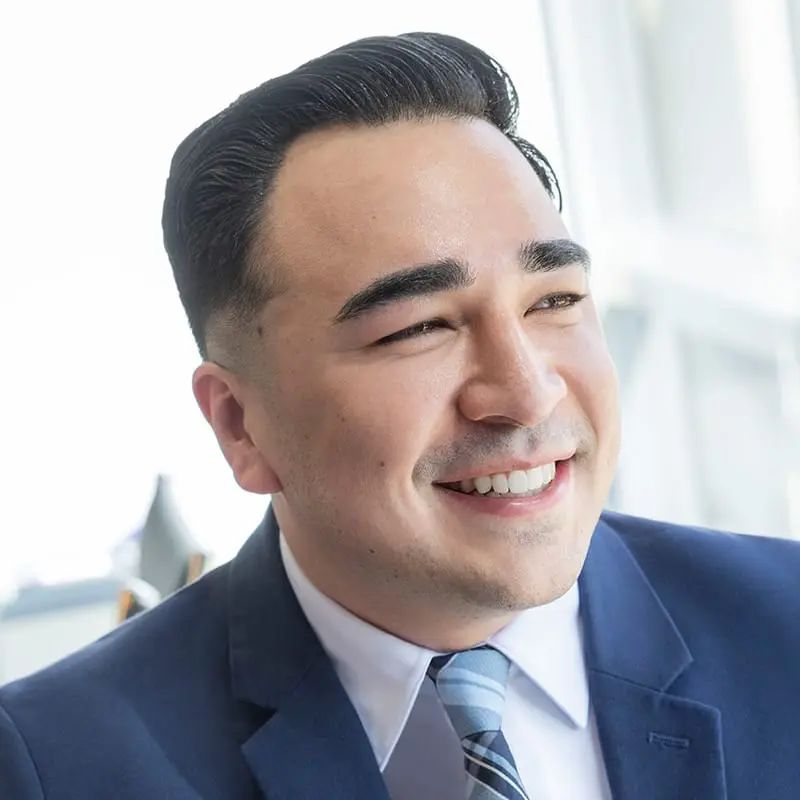

Justin Barrett Wilson
Founding Attorney | Former Collin County Prosecutor
We Offer Complimentary Consultations
If you are facing DWI, assault, sex crime, or other criminal charges, get in touch with My Dallas Criminal Lawyer to learn about your legal options.
My Dallas Criminal Lawyer » Collin County Sex Crimes Lawyer
If you have been accused of a sex crime in Collin County, you need to understand something most people never have a reason to learn: in this county, child sex cases and sexual assault cases are the most serious cases the District Attorney’s office prosecutes. Collin County does not see the volume of murders that Dallas County sees, so these are the cases where prosecutors bring their most experienced people and their hardest positions. That is what you are facing, and it is what we prepare for from the first phone call.
I am Justin Wilson, the founding attorney at My Dallas Criminal Lawyer. Before I defended these cases, I prosecuted felonies for the Collin County District Attorney’s Office. Between me, Kristi Tyler, Kimberly Barclay Palmer, and Justin Harris, our team brings 21 combined years as prosecutors and more than 300 trials. We know how the State builds a sexual assault case, how it evaluates a crimes against children case, and where those cases break, because we used to build them.
Our team now includes Kristi Tyler, former Chief of the Collin County District Attorney’s Felony Crimes Against Children Division.
Our office sits at 5 Cowboys Way in Frisco, on the Collin County side of the county line, minutes from the courts where these cases are decided. Every consultation is free, private, and handled with the discretion these cases demand. Call 214-764-5535 to speak with a Collin County sex crimes attorney today.
Our attorneys are former prosecutors with 21 combined years inside district attorney’s offices, and I prosecuted felonies for the Collin County District Attorney’s Office. We know how the Crimes Against Children Division evaluates a case, how the child exploitation unit approaches child pornography charges, and what prosecutors need to see before they move off a hard position, because we sat in those chairs.
Our team has conducted more than 300 trials, and our investigator spent a career inside the Collin County DA’s office before joining our side of these cases. In this county, the offers that change lives arrive on the eve of trial, and they arrive for defendants whose lawyers are ready to pick a jury. When we announce ready, the State knows it is real.
The subject matter of these cases is painful to say out loud, and most of our clients have never told anyone the full story before they sit down with us. We have heard it all, and nothing you tell us will shock us or change how hard we work for you. We never discuss the details of these cases openly, everything you tell us stays between us, and even with your own family we share only what you authorize us to share. From your first call, expect a private consultation and a discreet intake process.
Nearly every crimes against children case shares the same shape. There is no neutral third-party witness. In all my years of practicing, I have never had a case where an adult witness could testify that they saw the alleged act happen. These cases arise in private spaces, and they surface later through an outcry, sometimes immediately, sometimes ten years after the fact. Texas sets no statute of limitations on sexual assault of a child and several related child sex offenses, so there is no such thing as an allegation that is too old to charge.
Because the case usually comes down to a child’s word against an adult’s, everyone in the system operates on the same unspoken logic: we do not know whether this allegation is true, but if it is true, it is so serious that extreme caution is required. That mindset shapes everything that happens to you before any jury hears any evidence. It is why arrest warrants in these cases are rarely refused, why bond conditions are the most restrictive in the county, and why plea offers start with decades in prison. Understanding that reality is not a reason to despair. It is the reason the defense has to start early, move deliberately, and treat every stage as winnable, because the stages where these cases actually get won come earlier than most people think.
Most law firm websites talk about sex crimes as one category. Inside the Collin County District Attorney’s Office, they are not one category, and knowing who is evaluating your case tells you a great deal about how it will be handled.
The Crimes Against Children Division prosecutes the cases where the accusation involves sexual contact with a child: sexual assault of a child, aggravated sexual assault of a child, continuous sexual abuse, and indecency with a child. These cases are handled differently from every other felony in the county. For most felonies, a separate grand jury division presents the case, and if there is an indictment, a different trial prosecutor takes over. In the Crimes Against Children Division, the same prosecutor who receives the case presents it to the grand jury and keeps it through the end. That structure matters to your defense, and we explain why in the grand jury section below.
Adult sexual assault cases are prosecuted by the felony trial court prosecutors, alongside the county’s other serious felonies. Invasive visual recording cases traditionally land there too, although when the complainants are children, we have seen the Crimes Against Children Division take them.
Online solicitation of a minor and possession of child pornography cases belong to a small, specialized unit within the DA’s Major Crimes Unit that focuses on child exploitation. Because the unit is small, the same prosecutors evaluate these cases year after year. Experience with how that unit assesses cases, what it typically offers, and how it tries them is one of the most practical advantages a defense lawyer can bring, because it lets us prepare you accurately for what is coming instead of guessing.
A crimes against children case almost always begins with an outcry, the first statement the child makes about alleged abuse. The outcry witness can be anyone: a parent, a teacher, a school counselor, a sibling, a friend. Texas evidence law gives that first statement special status. Testimony that would normally be inadmissible hearsay is admissible when it comes from the outcry witness, which makes identifying and scrutinizing that first conversation a central piece of defense work.
From there, the process follows a pattern we know well. Someone calls the police, an officer takes the initial report, and the case is assigned to a detective who specializes in crimes against children. Each police department in the county has them. The detective interviews the adults, usually in recorded phone calls, and coordinates a forensic interview at the Children’s Advocacy Center, which serves Collin County from locations in Plano and McKinney. The forensic interview is conducted one-on-one by a trained interviewer whose job is to let the child speak without leading questions or suggested answers. It is recorded, and that recording becomes one of the most important pieces of evidence in the entire case, for both sides.
After the forensic interview, the detective reviews the recording, follows up with family members, and decides what to do with the case. That decision point, which most people never hear about until it is behind them, is where your defense can matter most. The detective either seeks an arrest warrant or sends the case to the DA’s office as a grand jury referral, where prosecutors present it to a grand jury that decides whether to indict. In our experience, a grand jury referral almost always ends in an indictment when no one has challenged the case. When the defense gets there first, the math changes, and we explain how below.
Before seeking a warrant, the detective will very often reach out to the person being accused and invite them to talk. This is the single most dangerous moment in the entire case. The call is being recorded. If the detective already has enough evidence for a warrant, the conversation exists to collect admissions that make the case stronger. If the detective does not have enough, the conversation exists to change that. In these investigations, detectives may also arrange recorded calls between you and people connected to the accusation, so a friendly voice on the phone bringing up the allegation is not always what it appears to be.
What you should do is simple. Be polite, stay calm, and say that you are not comfortable answering questions without an attorney. Take the detective’s name and number, end the call, and contact us immediately. Declining to be interviewed is not evidence of guilt, and no case has ever been saved by an accused person talking their way through a recorded interrogation without counsel.
Calling a lawyer at this stage protects you in a second way that few people know about. When a warrant issues in a child sex case, law enforcement does not sit on it. Officers come to your home or your workplace, sometimes with a full team, and the arrest happens in front of your neighbors, your coworkers, or your children. When we are hired before the warrant is executed, we contact the detective and, in many cases, arrange for you to turn yourself in privately within an agreed window. A quiet surrender at the jail instead of a team of officers at your front door is not a small difference. For many of our clients it is the difference between a private legal problem and a public catastrophe, and it is often the first concrete thing we accomplish in a case.
Most people believe a criminal case is won or lost at trial. In Collin County sex crime cases, the first real battlefield comes earlier, at the grand jury, and the math there deserves more attention than it gets.
At trial, all twelve jurors must agree unanimously to convict. At the grand jury, nine of twelve members must find probable cause to indict. Flip that around: if just four of the twelve are not convinced, the grand jury returns a no-bill and the case ends. In cases built on a single account of events from years earlier, with no forensic evidence and real questions of credibility and memory, persuading four people that probable cause is lacking is an achievable goal. It is the difference between a person moving on with their life and a person facing a first-degree felony trial.
That is why we build grand jury defense packets in these cases, and why we start investigating the moment we are hired. A packet is not a plea for sympathy. It is evidence: counseling records, school records, CPS histories, witness interviews conducted by our investigator, and documented inconsistencies that prosecutors and grand jurors have never seen, because the police investigation was never designed to find them. Where it fits the case, we add two more instruments. A psycho-sexual risk assessment by a licensed sex offender treatment provider, built on established forensic testing, can show that our client presents a low risk profile, and undergoing one is not an admission of anything. A polygraph, while inadmissible at trial, can be considered at every other stage of a case, and used correctly it can make prosecutors hesitate before presenting a weak case for indictment.
Texas law gives us one more pre-indictment tool: the examining trial. Unlike the grand jury, which meets in secret and hears only from the State, an examining trial happens in a courtroom with the rules of evidence in force, and we cross-examine the State’s witnesses under oath. Even when a magistrate finds probable cause, we walk out with sworn testimony months before we would otherwise see the State’s case. And because a pending examining trial tends to prompt the DA’s office to present the case to the grand jury promptly, requesting one is also how we force movement for clients whose lives are on hold under restrictive bond conditions while a referral sits unpresented, something we see regularly in multi-agency child pornography investigations.
The stakes of this stage are hard to overstate. Once these cases are indicted, plea offers start high and stay high. We have defended an aggravated sexual assault of a child case where the offer stood at 25 years in prison from indictment to the eve of trial. The grand jury stage is the one point where the entire case can end quietly, or where a first-degree charge carrying 25 years to life can become a lesser charge measured in years, not decades. If your case has not yet been indicted, do not wait. This window closes, and it does not reopen.
Ask anyone who has lived it: sex offender registration often changes a life more than the underlying case does. Registration can last ten years or a lifetime depending on the charge. And here is the local reality no statewide website will tell you: major Collin County cities, including Plano and Frisco, have used a combination of ordinances, zoning, and the placement of schools and parks to make it virtually impossible to live inside their city limits as a registered sex offender. Deregistration exists in Texas, but it is never guaranteed. So our strategy in every case is built around one organizing principle: avoid registration in the first place.
That principle explains decisions that might otherwise look surprising. It is why the grand jury fight matters so much, since the charge the grand jury returns controls the punishment range and the registration consequence. It is why charge-level negotiation can matter as much as guilt or innocence. One example we have used successfully: Collin County prosecutors have agreed, in the right cases, to resolve a sexual assault of a child charge as injury to a child under Penal Code Section 22.04. Prosecutors keep a felony conviction with real teeth behind it, and our client receives deferred adjudication with no sex offender registration at all. There are similar landing spots at other charge levels, including indecent assault, a Class A misdemeanor with no registration requirement. Knowing which reductions this DA’s office will actually consider, and what it takes to earn them, is the kind of knowledge that only comes from working these cases in this county for years, on both sides.
These cases deserve their own discussion, because they are investigated and prosecuted differently from contact cases.
Most Collin County child pornography cases begin far from Collin County, on the servers of an online platform. The platform’s systems flag suspected material and report it to the National Center for Missing and Exploited Children, which routes the report to local law enforcement based on the IP address involved. Investigators then work backward: administrative subpoenas to the internet provider to identify the account holder, records from the platforms linking usernames to email addresses, and finally a search warrant executed at a home, where every device capable of storing material is seized. An arrest usually follows shortly after. Because several agencies touch these cases, they can take a long time to reach a charging decision, which leaves people waiting under a cloud for months. We defend them by attacking the chain: whether each warrant was actually supported by probable cause, and whether the material legally qualifies as child pornography at all, a question that has become sharper in the age of AI-generated images, where the law’s lines are still being drawn.
When the evidence is lawfully obtained and the material qualifies, honesty matters, and here it is: the current posture of the specialized unit handling these cases is to offer prison time for possession or promotion of child pornography, even for people with no criminal history. In those cases the realistic path to probation is an open plea, a punishment trial where the judge, not the prosecutor, decides the outcome, and where deferred adjudication remains legally available. The court’s overriding question in that hearing is whether it can trust that the person in front of it poses no danger to any real child. The strongest answer we can give is a client who has committed to sex offender treatment with a licensed provider, consistently and over a real period of time, paired with a formal risk assessment. We have watched sustained treatment become the difference between probation and prison, and we start our clients on that path early for exactly that reason.
Online solicitation of a minor cases usually look nothing like what the public imagines. In the typical case there is no minor at all: the person on the other end of the chat was an undercover investigator from the start. Charge levels turn on the words used, with explicit messaging charged as a third-degree felony and an alleged agreement to meet for sexual contact charged as a second-degree felony. The defense turns on the same words: whether they truly amount to an agreement, and whether the government crossed the line from investigating a crime into manufacturing one.
We cover this entire process in depth, from the search warrant and the window before arrest through bond conditions, treatment, and charge reduction strategy, on our dedicated Collin County child pornography defense lawyer page.
Bond in these cases is its own fight, and families are rarely prepared for it. Amounts run high: we routinely see bonds from 50,000 to 100,000 dollars in child pornography cases, 75,000 to 150,000 in online solicitation cases, and 250,000 to 500,000 in sexual assault of a child cases, with bail bond companies typically charging a nonrefundable ten percent. The conditions attached are the most restrictive in the county: no contact with anyone under 17, including your own children until a court modifies the order, GPS ankle monitoring with a curfew, monitored internet use, travel limited to Collin and its neighboring counties, and more. A CPS investigation typically begins within two or three days of the arrest.
None of that is the end of the story. Bonds can be reduced at a hearing, conditions can be modified, and with the right sequencing, including letting CPS complete its investigation before asking the court to restore contact with your children, we regularly rebuild a livable life for clients while the case is fought. We approach reunification in deliberate steps, starting with supervised contact and building toward a full return home. If bond conditions are the most urgent problem in front of your family right now, call us.
Here is the plain truth most websites will not print: if you are charged with a child sex crime in Collin County, you should prepare to go to trial. Prosecutors here rarely dismiss these cases once they are filed. What we see instead, in case after case, is that meaningful offers arrive at the brink of trial, and they arrive because the State is staring at a defense that is actually ready. We have seen a case carrying a 25-year offer through the entire pretrial period resolve, on the eve of trial, for a misdemeanor with no registration and no additional jail time. Outcomes like that are never promised and never typical, but they only become possible for the client who prepared for trial as if the trial were certain.
That preparation is our practice’s identity. Our team has conducted more than 300 trials, and our investigator spent a career inside the Collin County DA’s office before joining our side of these cases. When we set a case for trial, the State knows the announcement is real. That credibility, more than any argument or letter, is what moves these cases.
A sex crime case that goes the distance typically takes 18 to 24 months to resolve. We believe you should know on day one what your defense will cost across that entire road, so we charge a single flat fee that covers all of our work on your case through trial. We quote it at your consultation, we put it in the contract, and because these cases run long, we can spread payments over time to make the cost manageable. Outside experts and investigators are engaged as your case needs them and are paid directly, so you see exactly where every dollar goes.
We built our fee structure this way because of what we know about how these cases end. The offers that change lives come at the eve of trial, and they come to defendants whose lawyers are ready to pick a jury. A client who cannot afford to reach that moment, because the retainer ran out or because a separate trial fee is out of reach, has lost their leverage precisely when it matters most. With one fee quoted in writing before you commit, the meter is never running, no phone call costs you anything, and the decision to accept an offer or go to trial is made for one reason only: because it is the right decision for your life.
Recent outcomes in these cases include a sexual assault of a child case investigated by McKinney police, dismissed. A sexual assault of a child case investigated by Frisco police, resolved as injury to a child with deferred adjudication and no sex offender registration. An aggravated sexual assault of a child case in Plano carrying a 25-year prison offer, resolved on the eve of trial as a Class B misdemeanor with time served and no registration. A failure to register case investigated by Plano police, dismissed. And for a client already serving a prison sentence for possession of child pornography, we secured parole. Every case is different, and past results do not guarantee future outcomes. What these results show is the pattern we build every case around: fight before indictment, prepare relentlessly for trial, and protect the client from the registry above all.
We defend sex crime and sexual assault cases in every Collin County felony court, for clients investigated by police in Frisco, Plano, McKinney, Allen, Wylie, Prosper, Celina, and across the county, as well as cases built by multi-agency task forces. Start with our guide to defending a criminal case in Collin County, or read about how the Texas grand jury process works. If your case is in Frisco specifically, our Frisco sex crime defense page covers the local details.
We have published detailed guides to the parts of the process that matter most in these cases. Read about how the Texas grand jury process works, how sex offender registration works in Texas, and when a sex crime case can be expunged. For the full picture of how felony cases move through the local courts, start with defending a criminal case in Collin County.
No. The call is recorded, and it exists to strengthen the case against you, whether or not a warrant already exists. Be polite, say you are not comfortable answering questions without an attorney, take the detective’s name and number, and call a lawyer immediately. Declining a police interview is not evidence of guilt, and getting counsel involved early can also mean arranging a private surrender instead of an arrest at your home or workplace.
Sometimes, yes. A Texas grand jury needs nine of twelve members to indict, so if four are unconvinced there is probable cause, the case ends in a no-bill. We build grand jury defense packets with investigation records, witness interviews, risk assessments, and, in the right cases, polygraph results, and we can also demand an examining trial where the State’s witnesses are cross-examined under oath. In our experience, unchallenged cases are almost always indicted, which is exactly why challenging them matters.
It depends entirely on the charge. Some offenses carry lifetime registration, others ten years, and some related charges carry none at all. Because registration often affects a life more than the sentence itself, our entire strategy is organized around avoiding it: fighting the charge level at the grand jury, negotiating resolutions to non-registerable offenses where possible, and taking cases to trial when that is the right path.
The most restrictive in the county. Expect a high bond amount, no contact with anyone under 17 including your own children until a court modifies the order, GPS monitoring with a curfew, monitored internet use, and travel limits. These conditions can be modified, and we regularly pursue bond reductions and stair-stepped modifications that restore contact with family, especially after CPS completes its investigation.
Usually not at first, because standard conditions bar contact with all minors. This is often the most painful part of the case, and it is fixable in many situations. The path typically runs through the CPS investigation that begins within days of arrest: once CPS closes with a negative finding, we ask the court for exceptions, usually starting with supervised contact and building toward a return home.
We charge one flat fee that covers all of our work through trial, quoted at your free consultation and written into your contract, with payments that can be spread across the 18 to 24 months these cases typically run. Experts and investigators are paid directly as your case needs them. You will never receive an hourly bill from us, and the cost of your defense will never be the reason you accept an offer you should refuse.
You should prepare for it from day one. Prosecutors here rarely dismiss these cases once filed, and offers tend to stay high until the eve of trial. The meaningful reductions we have won came because the State was facing a defense that was ready to pick a jury. Trial readiness is not a last resort in these cases. It is the strategy.
Sex crimes is the umbrella term. In Collin County, cases alleging sexual contact with a child are prosecuted by the DA’s Crimes Against Children Division, adult sexual assault is handled by the felony trial courts, and online solicitation and child pornography cases go to a specialized child exploitation unit. The charge and the unit handling it shape everything from plea posture to trial approach, which is why we map that out for every client at the first meeting.
Facing DWI charges in Frisco can threaten your license, job, and freedom. Our defense lawyers guide you through the process and fight for the best possible outcome.

Accusations of domestic violence can damage your reputation and family relationships. Our Frisco attorneys work to protect your rights and pursue a result that limits the consequences.
Sex crime allegations carry severe penalties and lifelong stigma. Our Frisco defense team builds a strategic response aimed at safeguarding your record and future.
Violent crime charges such as assault or robbery can lead to long prison sentences. Our Frisco lawyers investigate the facts and challenge the prosecution’s case at every step.
From simple possession to trafficking, drug charges in Frisco can affect your freedom and career. Our attorneys explore every option to reduce charges or seek dismissal.
Shoplifting and property crime accusations can follow you for years. Our Frisco lawyers work to protect your record and resolve the case with minimal long-term impact.
If you’re facing a probation revocation in Frisco, your freedom is on the line. Our attorneys work quickly to address violations and fight to keep you out of jail.

When facing the Texas parole system, experience is important. My Dallas Criminal Lawyer brings years of experience representing clients before the Texas Board of Pardons and Paroles.
Collin County
May 2026
Dismissed
Assault Causes Bodily Injury Family Member
Collin County
May 2026
Dismissed
Assault Causes Bodily Injury Family Member Class A
Collin County
May 2026
Dismissed
Robbery
Collin County
April 2026
Dismissed
Tampering with Evidence
Collin County
April 2026
Dismissed
Assault Family Violence
Collin County
April 2026
Refused
Assault Family Violence
Denton County
March 2026
Refused
Continuous Assault Family Violence
Collin County
April 2026
Dismissed
Tampering with Evidence
Eddie C.
Justin is a truly talented lawyer. His ability to think critically, and analyze quickly, are just a couple of traits that make him an excellent advocate for anyone charged with a crime. I’ve sat next to him in the courtroom and it is truly amazing to see him connect with a jury. He is an absolute pro.
Kamran V.
This law firm did an outstanding job for me. From start to finish, they were professional, knowledgeable, and supportive. They delivered exactly what they promised, and I couldn’t be happier with the result. I highly recommend them to anyone who needs legal help.
Thomas A.
Justin Wilson and Justin Harris were amazing. Highly recommend them.
Lybbie
I trust Justin for any legal related questions and he certainly delivers. I recommend him 100% as he is committed to you from start to end- no matter the situation.
Cristal D.
Absolutely the best team you could ask for. From start to finish, the entire office was professional, compassionate, and truly dedicated. They made me feel heard, respected, and confident during one of the most stressful times of my life. Their communication was consistent, and you can tell they genuinely care about their clients and their outcomes.
If you’re looking for a lawyer who is sharp, honest, and will fight for you like it’s personal – this is the team you want on your side. I can’t thank them enough for everything they did. They truly are the best in the business.
Natalie M.
Justin Harris was an exceptional lawyer- he is hardworking and dedicated and will reach your needs and more.
He was reliable and professional in every way. He makes sure that you are not only heard but seen. When working with Justin- it gave me strong trust that he cared and that he is a man of his word.
Highly recommend this law firm. Justin and the team handled my case with the upmost care, always kind and professional, and let me know all the details every step of the way.
Prof. Carlos R.
My first impression with Justin and Heidi was that they are a first class law firm, very professional and very open to answering questions and making a person feel appreciated. I am glad I met both at Formation in Frisco Texas.
Alex C.
I have come to know Justin and his team through my practice as a civil lawyer, and Justin has always impressed me with the way he treats his clients, and his ability to clearly explain options. He works tirelessly to be prepared for all his cases, and always treats others with professionalism and respect.
Joshua J.
Justin is a super professional lawyer with positive results. I would refer Justin to any one who needs help with anything. Justin gets it done with positive results.
Yoker V.
I highly recommend Justin 100%, the total positive experience started the moment we first spoke. Justin is a complete and total professional and a highly skilled lawyer outside and especially inside the courtroom. My case had its challenges but Justin skillfully did his research and presented the court and jury a master class. At the end of the trial the judge looked at the prosecutor and said, ” That’s how it’s done.” YLV
If a detective has called you, if CPS has shown up, if someone you love has been arrested, or if you simply know an accusation is coming, the hours and days in front of you matter more than any that come later. The grand jury window, the forensic interview, the bond conditions, the first recorded phone call: each is a moment where the right move protects you and the wrong one follows the case forever. We have guided people through every one of these moments, from both sides of the courtroom.
Call 214-764-5535 for a free, confidential consultation with a Collin County sex crimes defense lawyer. Discreet help starts with one phone call.
| Our team is available by phone 24/7 | Office Hours |
|---|---|
| Monday | 8AM – 5PM |
| Tuesday | 8AM – 5PM |
| Wednesday | 8AM – 5PM |
| Thursday | 8AM – 5PM |
| Friday | 8AM – 5PM |
| Saturday | Closed |
| Sunday | Closed |
| Our team is available by phone 24/7 | Office Hours |
|---|---|
| Monday | 8AM – 5PM |
| Tuesday | 8AM – 5PM |
| Wednesday | 8AM – 5PM |
| Thursday | 8AM – 5PM |
| Friday | 8AM – 5PM |
| Saturday | Closed |
| Sunday | Closed |
| Our team is available by phone 24/7 | Office Hours |
|---|---|
| Monday | 8AM – 5PM |
| Tuesday | 8AM – 5PM |
| Wednesday | 8AM – 5PM |
| Thursday | 8AM – 5PM |
| Friday | 8AM – 5PM |
| Saturday | Closed |
| Sunday | Closed |